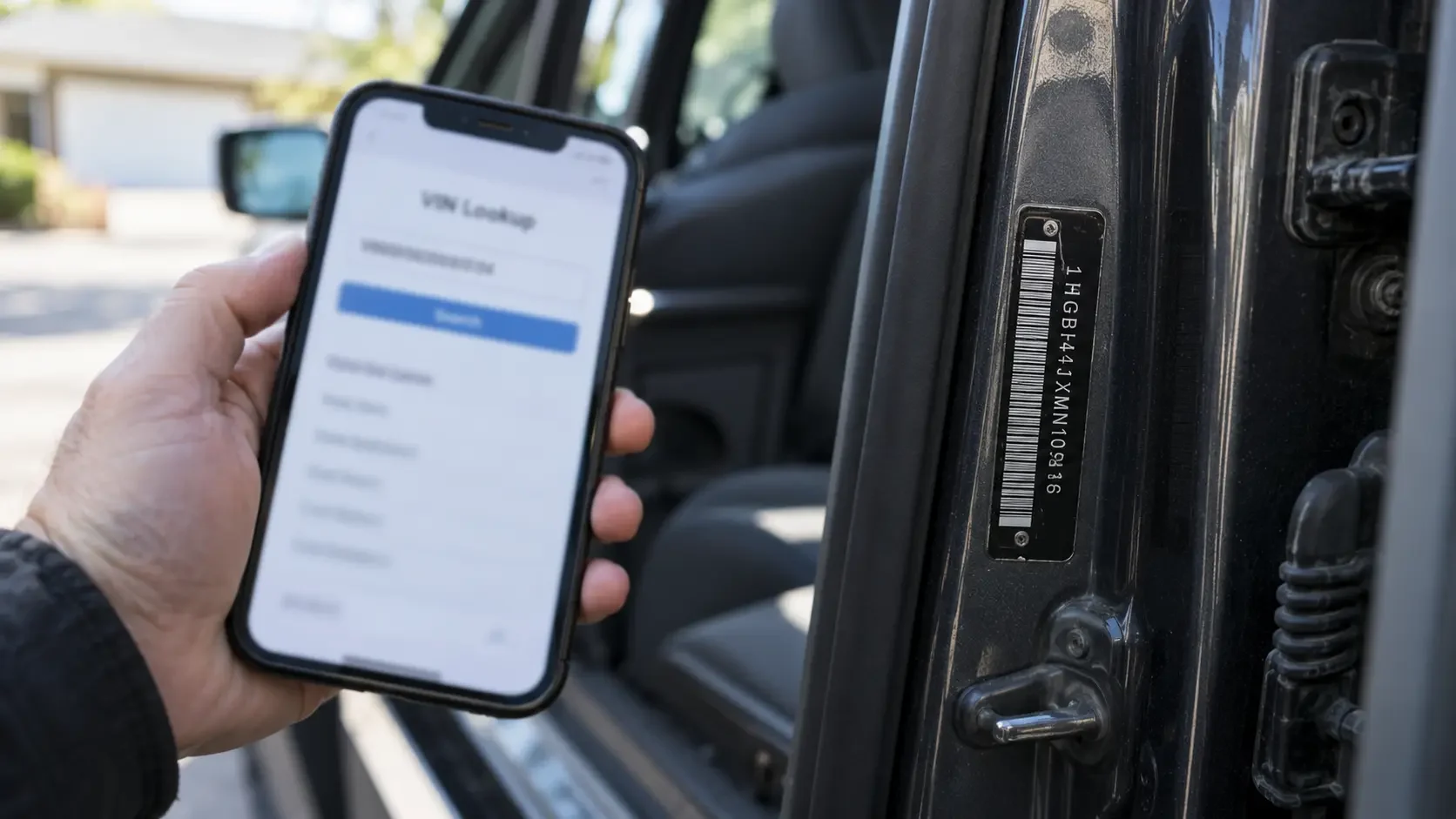
A used car can carry an open safety recall from years earlier that was never actually completed by a previous owner — recalls do not expire, and the repair remains free regardless of how many owners the vehicle has had since the recall was issued. Checking for this before you buy takes a couple of minutes using NHTSA's own free tool and is one of the few pre-purchase checks with no cost and no ambiguity about the result.
How the official check works
The National Highway Traffic Safety Administration runs a free VIN lookup at nhtsa.gov/recalls that searches the vehicle's 17-character VIN against open recall records. You can also search by make, model, and year if you do not have a specific VIN yet, though a VIN-specific search is more precise since it reflects the exact build and any recalls tied to that specific unit rather than the model generally.
What the NHTSA tool does not tell you
The recall lookup is narrowly focused on safety-related manufacturer recalls, crash test ratings, and defect investigations — it does not include ownership history, prior accident records, odometer readings, flood or salvage history, or lien status. Those are separate checks covered in the companion guides on reading a vehicle history report and running a VIN check, and they generally require a paid service (like a Carfax or AutoCheck report) or the free NMVTIS-linked search, not the NHTSA recall tool specifically.
A practical pre-purchase sequence
- Get the full 17-character VIN from the seller before you commit, either from the dashboard (visible through the windshield), the driver's door jamb sticker, or the title/registration paperwork.
- Run it through NHTSA's free recall lookup at nhtsa.gov/recalls.
- If an open recall shows up, ask the seller directly whether they are aware of it and why it was never completed — a seller unwilling to answer, or unaware entirely, is worth noting as part of your overall assessment of how the car was maintained.
- If you decide to buy anyway, get the recall repair scheduled at an authorized dealer as one of your first-week tasks, since it costs nothing and some recalls involve genuine safety systems (airbags, brakes, steering) worth resolving promptly.
Why sellers sometimes do not know about an open recall
Recall notices are mailed to the registered owner at the time the recall is issued — if the car has changed hands since then, a later owner may never have received that specific notice and can be genuinely unaware the recall exists, rather than concealing it. This is exactly why running the check yourself, rather than only asking the seller, matters: it does not depend on the seller's own knowledge or honesty, since it is a direct manufacturer/VIN-level record you can verify independently in a couple of minutes.
If you already own the car and find an open recall later
The same free tool and process applies after purchase, not just before. Periodically re-checking your VIN is worth doing, since manufacturers issue new recalls on existing models over time, and NHTSA also allows you to sign up for direct recall alert notifications tied to your VIN so you do not have to remember to check manually.
How an open recall interacts with an as-is sale or extended warranty
A common misconception is that buying a vehicle "as is" waives your right to a free recall repair, or that an extended warranty covers recall-related work the way it covers a mechanical breakdown. Neither is accurate. Recall repairs exist under a separate federal safety framework entirely independent of how the vehicle was sold or what warranty coverage you have — an as-is sale affects your recourse against the seller for the vehicle's general condition, but it does not affect your right to a free manufacturer recall repair, since that right belongs to the vehicle (via its VIN) rather than to a specific sales transaction.
Similarly, an extended warranty or vehicle service contract you purchase separately is a private commercial product covering specific mechanical failures under its own terms, and it has no bearing on recall eligibility one way or the other. Don't let a salesperson conflate the two if you're being offered a service contract — asking whether a vehicle has open recalls and asking about extended warranty coverage are two completely separate questions with separate answers.
If you find an open recall on a vehicle you're seriously considering, it's reasonable to still proceed with the purchase in most cases, since the repair itself is free at an authorized dealer regardless of who owned the car when the recall was issued. The main practical step is factoring in the time needed to get the repair scheduled and completed, particularly if the recall involves a safety-critical system you'd want addressed before extensive driving, rather than treating an open recall as a reason to walk away from an otherwise sound vehicle.
It is also worth checking recall status again right before you actually take delivery, not only when you first started shopping, since a new recall can be issued at any time and the gap between your initial search and the closing date is sometimes several weeks. A quick re-check costs nothing and ensures the information you are relying on reflects the vehicle status as of the day you actually take possession, not the day you first looked it up.