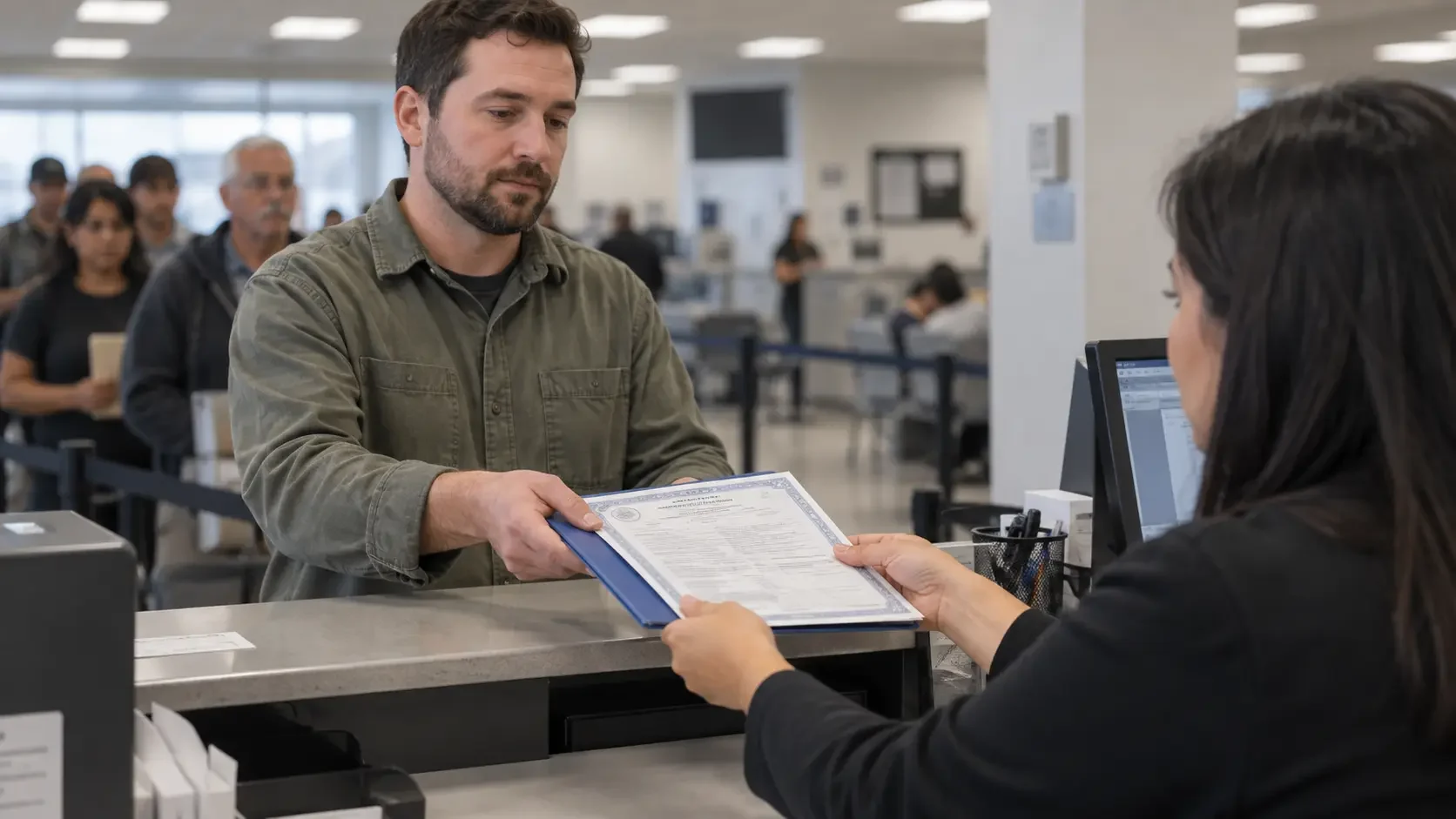
Driving an out-of-state purchase home on a transit permit or temporary tag (covered in the companion guide) is only the first half of the process. Once you arrive, your home state generally requires you to title and register the vehicle there within a specific deadline, using documents from the state where you bought it plus your own state's own forms — and the two states' paperwork do not always line up perfectly, which is where buyers commonly lose time.
The clock usually starts when you bring the car home, not when you bought it
Most states set a specific window — commonly around 30 days, though this varies — to title and register a vehicle after it enters the state, whether that is the purchase date or the date you physically brought the car home, depending on your state's specific rule. Missing this window typically triggers a late fee or penalty on top of the normal registration cost, separate from anything related to your original transit permit's expiration.
Documents you generally need to bring
- The out-of-state title, properly signed over to you by the seller (or the dealer's equivalent title/MSO paperwork for a dealer purchase)
- Proof of ownership — this can be the title itself, or in some cases a temporary registration document if the permanent title has not yet arrived from the seller's state
- Proof of identity and residency in your home state
- Proof of insurance meeting your home state's minimum coverage requirements — see the companion guide on getting an insurance binder before the VIN if this is a same-day concern
- A completed application for title/registration specific to your home state's DMV
- Bill of sale, if your state requires it separately for calculating use tax
Use tax: the number that surprises out-of-state buyers
If you paid sales tax in the state where you bought the car, your home state may give you a credit for that amount against what you owe there, but this is not automatic or universal — some states require you to pay the full amount of your home state's tax regardless of what you already paid, and some cap the credit at what your home state's rate would have been. Ask your home state DMV directly how they handle tax already paid in another state before you assume you will not owe anything further.
Inspection and emissions requirements
A number of states require a vehicle inspection, emissions test, or VIN verification as part of registering an out-of-state vehicle for the first time, even if the car passed a similar inspection in the state you bought it in — inspections are generally not transferable between states. Check whether your home state requires this before you assume the registration appointment is a single, quick stop, since scheduling a separate inspection can add days to the process, sometimes running into the tail end of your transit permit's validity window.
| Step | What to watch for |
|---|---|
| Arrive home with the out-of-state title/paperwork | Confirm nothing is missing before your DMV appointment — incomplete paperwork is the most common delay |
| Complete any required inspection/emissions test | May need to be scheduled separately and can take several days depending on availability |
| Visit the DMV with all documents and proof of insurance | Bring originals, not just photos — many DMVs will not accept a digital copy for title transfer |
| Pay title, registration, and any applicable use tax | Ask specifically how tax already paid in the purchase state is credited, if at all |
| Receive your home-state plates and registration | Confirm the transit permit or temp tag from the purchase state is no longer needed once new plates are issued |
If your transit permit is about to expire before you finish
If the registration or inspection process is taking longer than your transit permit's validity, contact your home state's DMV before the permit lapses to ask about a short extension or an alternate temporary permit — do not simply keep driving on an expired document while you wait for an appointment slot, since that puts you in the same position as driving unregistered.
VIN verification: a step that trips up buyers who don't expect it
Beyond a general safety or emissions inspection, many states require a separate VIN verification step for a vehicle titled out of state, specifically to confirm the physical VIN on the car matches the VIN on the paperwork you're bringing in. This is a distinct check from an emissions test and is sometimes performed by a specific class of inspector — a licensed dealer, a notary with VIN-verification authority, a law enforcement officer, or a DMV agent, depending on the state — rather than at a general inspection station.
This step exists partly as a fraud check, since a mismatched or altered VIN is one of the clearer signs of a stolen or improperly retitled vehicle, and partly as a basic data-accuracy check to make sure a typo somewhere in the paperwork chain didn't introduce an error before the vehicle is registered in a new state's system. If your state requires this and you skip researching it in advance, it can be the one step that adds an unexpected extra stop to what you assumed would be a single DMV visit.
Because who is authorized to perform a VIN verification varies so much by state, confirm this specific requirement with your home state DMV before your registration appointment, and ask whether it can be completed at the same visit or needs to happen separately beforehand. Building this into your planning avoids discovering it as a surprise mid-appointment, which can mean an extra trip if the person available that day isn't authorized to perform the verification.