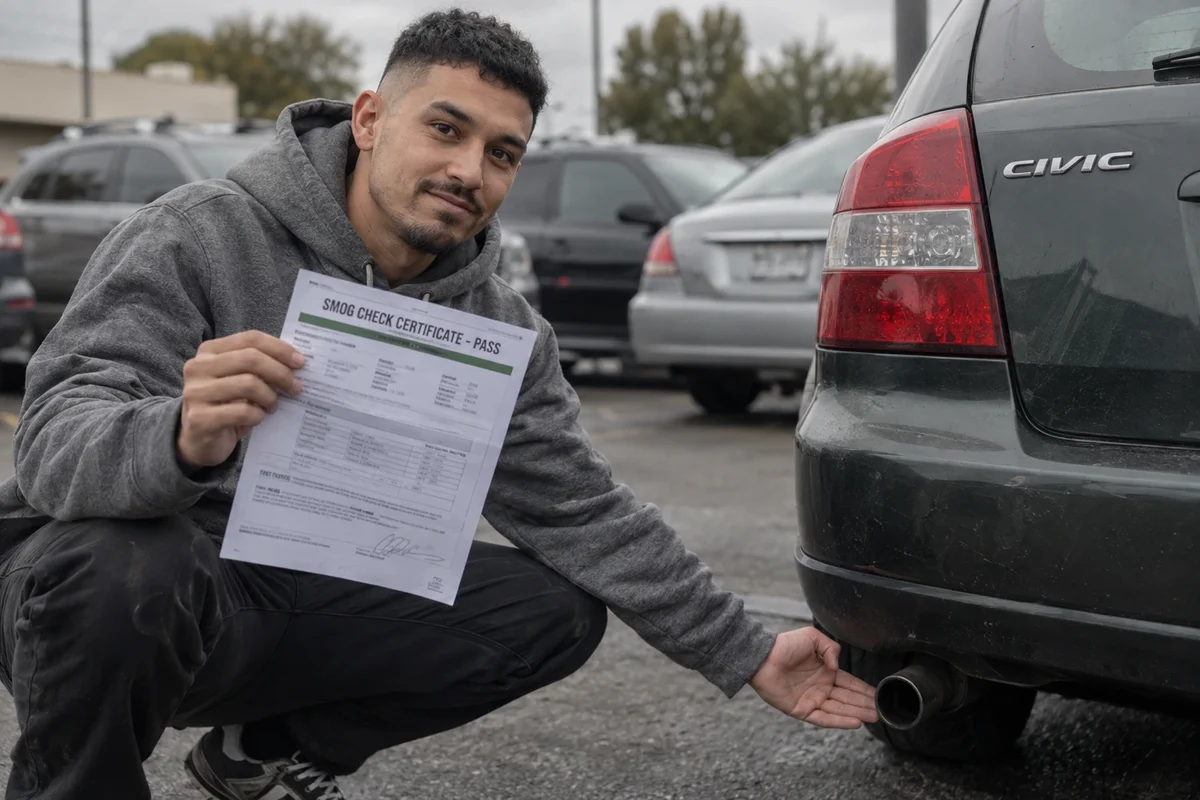
If you're buying a used car in one of the roughly 28 states (plus Washington, D.C.) that require emissions testing, whether the seller or you are responsible for getting a valid smog certificate before the sale closes depends entirely on your specific state's rules — and getting this wrong can leave you unable to register a car you already own and paid for.
Which states actually require this
As of the most recent count, 28 states plus D.C. require emissions or smog checks, typically concentrated in higher-population or higher-pollution metro areas rather than statewide in every case. States including California, New York, Texas, and Illinois require testing; roughly 22 states, including Florida and Alabama, have no emissions testing program at all. Some states that do test only require it in specific counties — Maryland's requirement, for example, applies to vehicles registered in the D.C. metro-area counties, not the whole state.
Who's actually responsible: seller or buyer
Among the states with emissions testing, practice varies significantly: some states place the legal duty squarely on the seller to hand over a valid smog certificate as a condition of sale, others expect the buyer to complete testing after purchase before registering, and the specifics differ by state even among those with a testing requirement. California requires emissions testing specifically when a vehicle changes ownership or registers for the first time in the state, in addition to its regular biennial testing cycle at renewal — which means a change-of-ownership test is often required regardless of when the vehicle last passed.
| Scenario | What to check |
|---|---|
| Private-party sale in a testing state | Confirm in writing whether the seller is providing a current passing smog certificate, or whether you're expected to test it yourself after purchase |
| Dealer sale in a testing state | Many states require the dealer to provide a passing certificate as a condition of sale — confirm this is included, not assumed |
| Out-of-state purchase brought into a testing state | Check your home state's requirement for a change-of-ownership or first-registration test, which often applies even if the seller's state has no testing program |
How testing timing interacts with your registration renewal cycle
In states with biennial (every-other-year) testing, a used car's test history from its previous owner may or may not still be valid depending on exactly when in the two-year cycle you're buying it — a test performed eight months ago under the previous owner's registration doesn't necessarily carry forward to your new registration under your name. Confirm directly with your state's program whether a change of ownership triggers a new test requirement regardless of when the last one was performed, since assuming the existing test 'still has time on it' is a common and costly mistake.
What happens if the car fails
If you've already purchased a car that fails its required emissions test, you're generally on the hook for repairs to bring it into compliance before you can register it — unless your state's used-car protections or your purchase agreement specifically allocated that risk to the seller. This is exactly why confirming the emissions-testing responsibility before the sale closes matters more than most buyers realize: a failed test discovered after you've already paid and taken the title puts the repair cost entirely on you in most states, with no seller obligation to help unless you negotiated one into the sale.
Repair-cost assistance programs exist in some states
A number of states with emissions programs also run a repair-assistance or waiver program for vehicles that fail testing and would require expensive repairs to pass — typically available to buyers who meet income requirements or after spending a minimum amount on unsuccessful repair attempts. These programs are easy to miss because they're not always mentioned at the point of testing failure; search your specific state's emissions program name plus 'repair assistance' or 'waiver' before assuming a failed test means an open-ended repair bill with no help available.
Older and classic vehicles sometimes have separate rules
Many state emissions programs exempt vehicles above a certain age (commonly 25 or 30 years, tied to historic or antique vehicle registration categories) from regular testing entirely. If you're buying an older used vehicle specifically because you assume it's exempt, confirm your state's exact age cutoff and whether the vehicle needs to be registered under a specific historic-vehicle category to qualify for that exemption, rather than assuming age alone is sufficient.
Federal recall status is a separate check worth doing at the same time
While you're confirming emissions compliance, check the vehicle's VIN against NHTSA's open recall database as well — an open safety recall is unrelated to emissions testing but is a free, five-minute check worth doing at the same point in the buying process, since a dealer is required to disclose and often required to complete open recalls before resale, while a private seller has no such obligation.
Diesel and specialty-fuel vehicles can have separate requirements
Diesel-powered vehicles are sometimes tested differently than gasoline vehicles under the same state program, with different equipment, different failure thresholds, or in some states, a separate opacity test rather than a standard tailpipe analysis. If you're buying a diesel used vehicle, don't assume the general gasoline-vehicle testing description applies unchanged — check your state program's specific diesel testing procedure and any additional inspection points, since diesel emissions equipment (particulate filters, especially) can also be an expensive repair category if it's failing.
Practical steps before you buy in a testing state
- Confirm whether your specific state or county actually requires emissions testing — don't assume based on a neighboring state or a general impression.
- Ask the seller directly whether the vehicle currently has a valid, unexpired emissions certificate, and get the date and result in writing if possible.
- If buying from a dealer, confirm in the purchase agreement whether a passing test is included as part of the sale.
- If the car doesn't currently have a valid certificate, get it tested before finalizing the purchase, or negotiate a price reduction that accounts for the risk and potential repair cost if it might not pass.
- If bringing a car in from out of state, check your home state's first-registration emissions requirement separately from whatever the seller's state required.
Keep a copy of any passing test result even after registration is complete — some states require it again at the next renewal cycle regardless of whether the DMV's own records show it, and a lost paper result can mean re-testing a car that already passed simply because the record didn't carry forward cleanly between agencies.