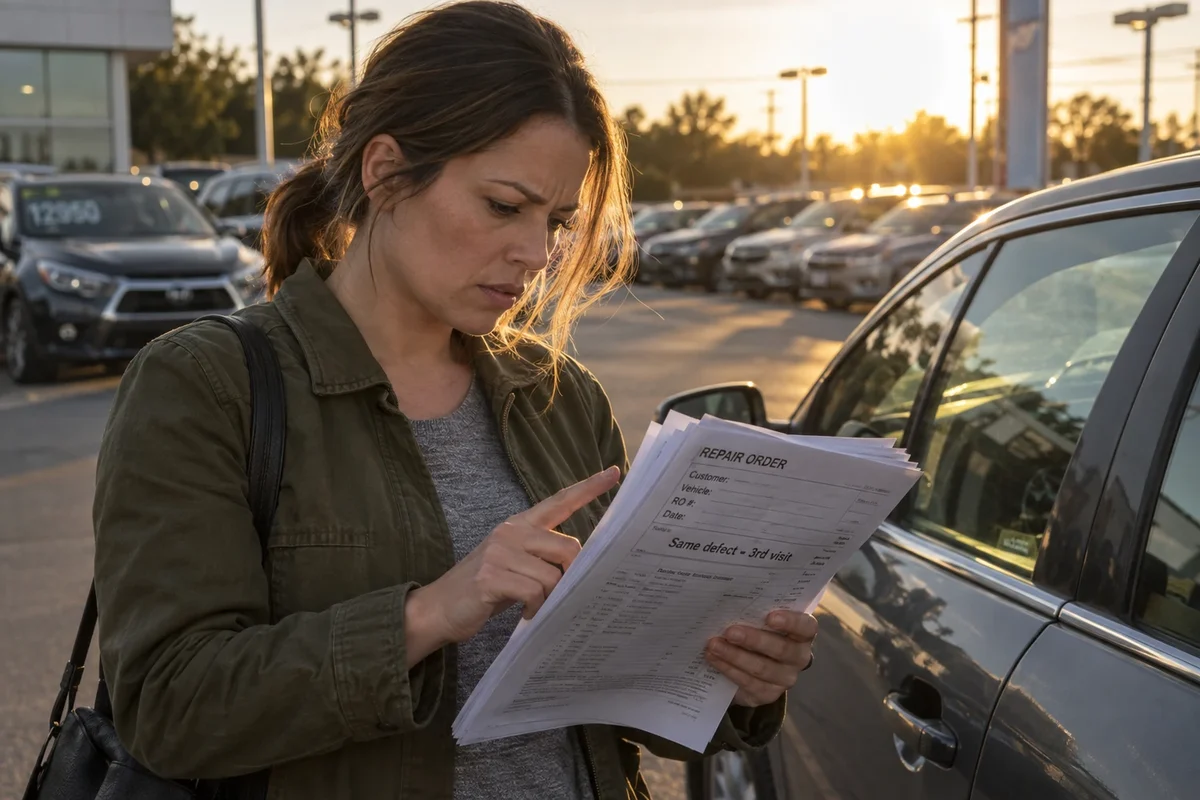
Ask most people what a "lemon law" covers and they'll describe new-car protection — which is correct for most states, and exactly why a defective used car catches so many buyers off guard. A minority of states, though, have written specific used-car lemon law protection into their statutes, and if you're in one of them, an "as is" sticker on the windshield does not necessarily mean you have no recourse.
Which states actually cover used cars
Hawaii, Massachusetts, Minnesota, New Jersey, New York, Rhode Island, and the Virgin Islands have used-car lemon laws that create a minimum warranty for used vehicles despite an "as is" disclaimer. Outside these jurisdictions, a used car sold as-is by a private seller or dealer generally has no lemon law protection at all — your recourse, if any, comes from other consumer protection law, an existing manufacturer warranty, or fraud claims, not a used-car lemon statute.
| State | Coverage trigger | Warranty minimum |
|---|---|---|
| Massachusetts | Dealer sale over $700, under 125,000 miles | 90 days/3,750 miles if under 40,000 miles at sale; shorter tiers above that |
| New York | Dealer sale over $1,500, under 100,000 miles | Dealer must provide a written warranty scaled to mileage |
| New Jersey | Dealer sale meeting statute's criteria | Reasonable repair attempts standard: 3+ repair attempts on same defect, or 20+ days out of service |
Each of these statutes has its own specific price floor, mileage ceiling, and warranty duration — the table above is a starting reference, not the full statutory text. If you think you may be covered, pull your specific state's actual lemon law statute language rather than relying on a general summary, since these thresholds get updated and vary in exact wording.
Why "as is" doesn't always mean no protection
In states with used-car lemon laws, the statute creates a minimum warranty that exists independently of, and on top of, whatever the sale contract says — a dealer cannot contract around it simply by writing "as is" or "no warranty expressed or implied" on the bill of sale. This is different from private-party sales, which most used-car lemon laws exclude entirely; the protection generally applies only to licensed dealer sales, not a sale between two private individuals.
How this differs from a manufacturer's original new-car warranty
If the used car is young enough to still be within its original factory warranty period, that coverage exists independently of any state used-car lemon law and generally offers stronger, more standardized protection since it follows federal Magnuson-Moss Warranty Act rules. Check the original in-service date and the manufacturer's specific warranty length and mileage terms before assuming you need a state lemon law claim at all — many used-car defect problems are actually still covered by simple factory warranty, which is a faster and cleaner path than building a lemon law case.
What counts as a "reasonable number of repair attempts"
Where a used-car lemon law does apply, the standard for when a defect entitles you to a remedy typically mirrors new-car lemon law language: the same defect must have gone through a defined number of repair attempts (commonly three or more) without being fixed, or the vehicle must have been out of service for repairs a set number of days (commonly 20 or more) during the warranty period. A single repair attempt, even for a serious problem, usually doesn't meet this bar — document every repair visit, the date, the mileage, and the specific complaint each time, since this record is what actually establishes the pattern the statute requires.
What remedy you actually get if the statute applies
Where a used-car lemon law applies and the repair-attempt threshold is met, the typical remedies are a refund of the purchase price (sometimes minus a mileage-based usage deduction) or a replacement vehicle, at either the buyer's election or the dealer's, depending on the specific statute's wording. Some states require you to send the dealer a final written notice and opportunity to repair before you can demand a refund or replacement — skipping this notice step can weaken or void your claim even if the underlying repair history would otherwise qualify.
Start the documentation habit at the first repair visit, not the third
Because the legal threshold depends on a pattern across multiple visits, the paperwork from your very first repair attempt matters just as much as your third. Keep the repair order, the date, the odometer reading, and the technician's own description of the complaint and diagnosis for every visit related to the same defect — a customer who only starts keeping records once they suspect a lemon law claim is coming often can't reconstruct the earlier visits with the same precision.
If your state has no used-car lemon law
- Check whether the vehicle is still under a manufacturer's original warranty — that coverage transfers to a used-car buyer independent of any state lemon law.
- Check whether the dealer offered a limited warranty under the FTC's Buyers Guide requirement — that separate federal disclosure requirement can create its own enforceable warranty even without a state used-car lemon law.
- Look into your state's general consumer protection or deceptive trade practices statute, which can apply if the seller misrepresented the vehicle's condition regardless of whether a lemon-law-specific statute exists.
- Check whether the defect was actually disclosed or actively concealed — fraud and misrepresentation claims exist independently of lemon law coverage in every state.
A separate issue: manufacturer buyback branding
Don't confuse a state's used-car lemon law with "lemon law buyback" title branding, which is a different mechanism entirely — a vehicle a manufacturer repurchased after a new-car lemon law claim, then resold with a disclosed brand on the title. A car can be perfectly free of any lemon law buyback branding and still turn out to be a lemon under your state's used-car statute, and vice versa; check both separately rather than assuming a clean title history rules out a lemon law claim.
When to actually involve an attorney
Most states' used-car lemon laws (and lemon laws generally) include a fee-shifting provision that requires the dealer or manufacturer to pay your reasonable attorney's fees if you win, which is why many consumer attorneys in this area take lemon law cases on contingency with no upfront cost to you. If your documented repair history genuinely meets your state's threshold and the dealer isn't cooperating, a brief consultation with a lemon law attorney costs you little and can clarify whether your specific fact pattern is strong enough to pursue formally.